
Water Testing
Here in the Ozarks, water is one of our most valuable resources. Did you know the Taney County Health Department has a certified water lab to test local well water?
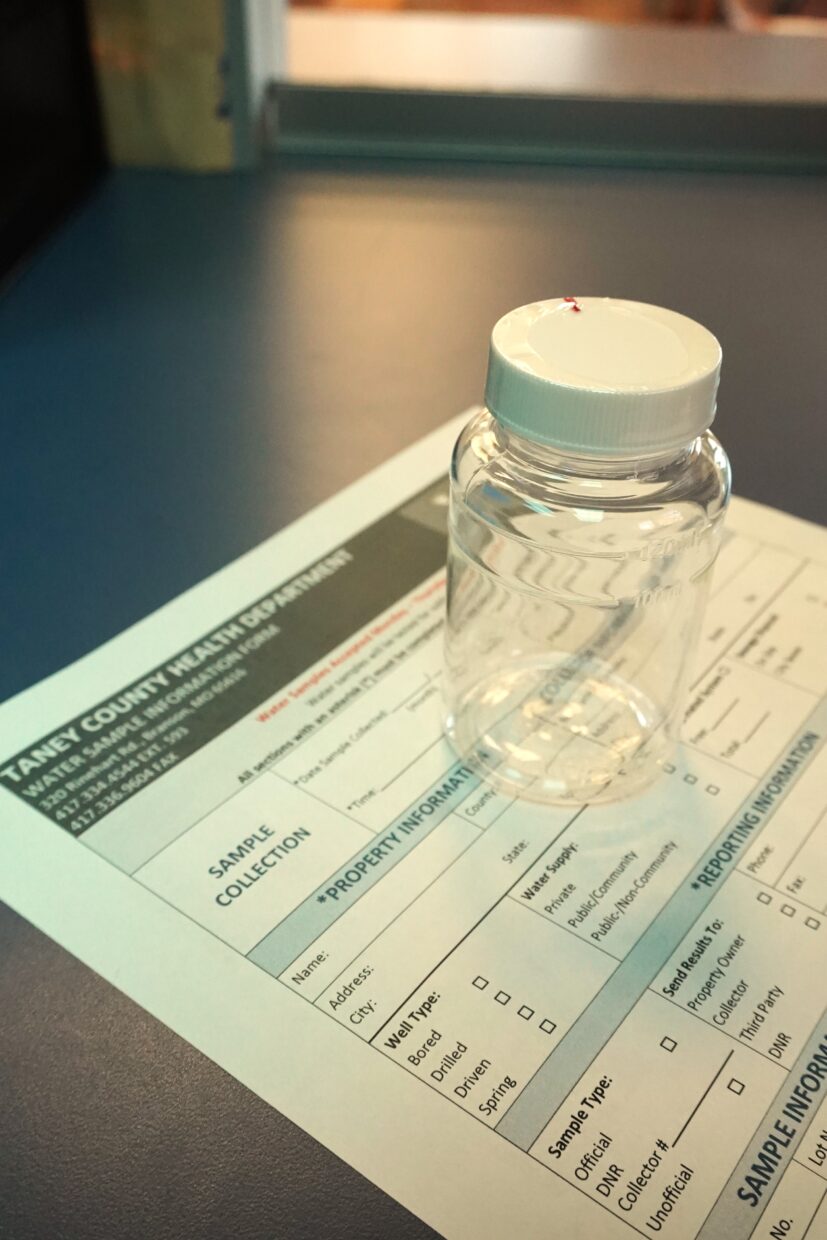
What’s In Your Water?
To better protect the health of your family, it is recommended that private water wells be tested every year to ensure no harmful bacteria are present. TCHD’s drinking water lab is certified through the Missouri Department of Natural Resources (DNR) to test for the presence and absence of coliforms and E. coli bacteria. Water sample test kits can be picked up at either health department location. Water samples must be submitted to TCHD within 24 hours of collection and test results are emailed within 1-2 business days.
The State Public Health Laboratory provides additional test options for drinking water. For more information click the link below.
Dates and Times Water Samples are Accepted
Find the dates and times for water sample submissions at each TCHD location below.
-
Water samples are accepted at the Branson office Monday – Thursday, 8:00 am to 3 pm.
No water samples are accepted on Fridays.
For the month of December 2025, water samples will not be accepted on the following dates:
- December 23rd – 26th
- December 31st
For the month of January 2026, water samples will not be accepted on the following dates:
- January 1st
- January 8th
- January 19th
-
Water samples are accepted at the Forstyh office Monday – Wednesday, 8:00 am to 2 pm.
No water samples are accepted on Thursdays or Fridays.
For the month of December 2025, water samples will not be accepted on the following dates:
- December 23rd – 26th
- December 31st
For the month of January 2026, water samples will not be accepted on the following dates:
- January 19th
Common Water Testing Mistakes
Avoid these common mistakes when testing your well water. It is possible to unknowingly introduce bacteria to the sample if the instructions are not followed closely. PLEASE READ THESE INSTRUCTIONS COMPLETELY BEFORE COLLECTING SAMPLES .
-
Before you even open the jar, read all the instructions to make sure you are fully prepared and have all supplies needed to complete the test. Even one misstep can lead to contamination of the sample.
-
Make sure to use the bleach and water mixture on the inside and outside of your faucet. Keep in mind the aerator can hold bacteria. Remove the aerator from the faucet before adding the bleach and water mixture to it.
-
Make sure you avoid touching the inside of the lid. Your hands can introduce bacteria to the water sample, causing an incorrect result.
-
If your well water has tested positive and you are shocking the well, be sure to allow the chlorine to sit in the system long enough. Once chlorine has been added to your well, turn on all faucets in your home until you smell bleach. When you can smell bleach, turn off all the faucets and allow the chlorine to sit in your pipes for 6-8 hours to kill the bacteria. Not allowing the chlorine to sit in the system 6-8 hours increases the chance of your water samples continuing to test positive.
-
If you have shocked your well and the odor of chlorine is still present in your water, continue flushing the system until the odor is gone, or very faint. Samples that have a chlorine odor present when the bottle is opened will not be tested.
Frequently Asked Questions
See below for some the most frequently asked questions about testing your water at home.
-
If the sample is from a private well located in Taney County, the cost is $15.
If the sample is from a private well located outside of Taney County, the cost is $35.
-
Our lab tests for the presence or absence of E. coli/coliforms. Our tests do not determine the quantity of bacteria present in your water.
-
Coliform and E. coli are types of bacteria commonly found in animal feces and soil and can cause illness in people.
-
It is recommended to test private wells every year. The best time to test a well is in the spring after heavy rainfall. This is when bacteria have a greater chance of entering your well.
-
Click below to access the full Water Sample Collection Form and Instructions.
-
There may be bacteria present in the water that can cause illness. All water that may be consumed or ingested should be boiled to kill the bacteria that may be present until the well tests absent for coliforms/E.coli. Discard all ice that was made from this water source and boil the water before drinking it, use it to make new ice, brushing teeth, or use it as an ingredient or to prepare food. You can continue to shower and wash your hands without boiling the water.
Instructions for disinfecting, also known as “shocking”, a well and an explanation of private drinking water test results can be found by going to Missouri Department of Health and Senior Services Well Water Testing page.
Full Water Sample Collection Instructions can be found below.
2025 Water Sample Collection Form and Instructions
If you still have questions, please contact us. Our Environmental Health Team is here to answer your questions.